Hot House Flowers
Minnesota's high-trust culture is something rare and worth protecting. Like hothouse flowers, our "Minnesota Nice" way of life thrives in a carefully tended environment — but that same openness can be exploited when we stop asking hard questions about who we're inviting in and why.
Hot House Flowers
Hello everyone,
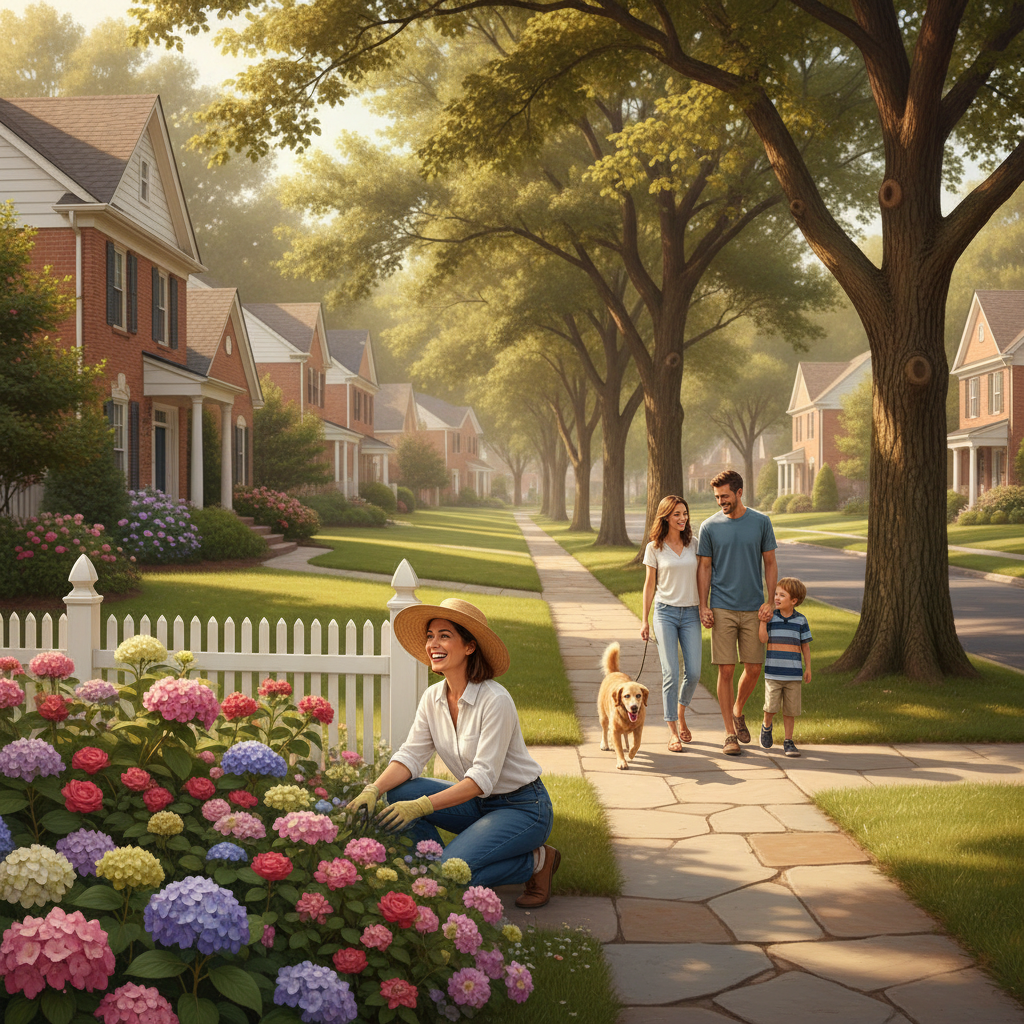
Picture a greenhouse in January. Outside, it's fifteen below. Inside, orchids bloom. Birds of paradise stretch toward the glass. Bromeliads glow in shades of red and gold. It's a miracle of careful tending — warm, humid, protected from the brutal world just beyond the panes.
That's Minnesota.
We have built something genuinely rare here: a high-trust society. Neighbors leave their doors unlocked. Strangers help push your car out of a snowbank without being asked. Businesses operate on handshakes. We call it "Minnesota Nice," and we mean it. It isn't a performance — it's a culture built over generations by people who chose cooperation, civic responsibility, and mutual respect as their operating system.
But hothouse flowers are fragile. They thrive precisely because the environment is controlled. Open the greenhouse doors in a blizzard and the orchids die.
The Science of Early Formation
There's an old Jesuit saying: "Give me a child until he is seven, and I will show you the man." Modern neuroscience backs this up. In the first seven years of life, children's brains operate primarily in alpha and theta wave states — the same states adults enter during deep meditation or hypnosis. In these states, the mind absorbs everything around it without a critical filter. Values, behaviors, and assumptions about how the world works are literally wired in at the neurological level.
Children raised in high-trust environments — where institutions are reliable, strangers are generally safe, and cooperation is rewarded — develop a fundamentally different internal operating system than children raised in low-trust, survivalist environments where loyalty to the tribe is the only reliable protection.
This isn't a moral judgment. It's developmental reality. And it matters enormously for public policy.
Minnesota Nice Meets the World
Minnesota has a long and proud tradition of welcoming newcomers. Our Scandinavian and German forebears came with nothing, worked hard, built communities, and became Minnesotans. Later waves — Hmong refugees, East African immigrants — have added richness to our state and many have become deeply woven into the fabric of our communities.
But welcoming people is not the same as having no standards. And "Minnesota Nice" is not the same as Minnesota Naive.
When we import large numbers of people from low-trust, tribalist environments — without adequate screening, without civic integration requirements, without honest conversation about cultural compatibility — we are opening the greenhouse doors. We are assuming that the warmth inside will simply transform whoever walks in, regardless of what was wired in during those first seven years.
Sometimes it does. Many immigrants arrive hungry for exactly what Minnesota offers and embrace it fully. But sometimes it doesn't. And when it doesn't, the costs fall on ordinary Minnesotans — in their neighborhoods, their schools, their sense of safety.
Who Benefits From the Current System?
Here's a question worth asking: who profits from the current refugee resettlement model?
Resettlement agencies — including faith-based organizations receiving federal contracts — are paid per head. The more people they place, the more revenue they generate. This creates a financial incentive that has nothing to do with whether the placement is good for Minnesota, good for the receiving community, or even good for the refugee.
Meanwhile, the long-term costs — in social services, in schools, in law enforcement, in housing — are borne by Minnesota taxpayers. And the political benefits flow to one party, which has every incentive to grow a dependent constituency rather than an independent one.
I'm not saying everyone involved has bad intentions. I'm saying the incentive structure is broken, and broken incentive structures produce predictable outcomes regardless of intentions.
A Proposal Rooted in Respect
I believe in legal immigration. I believe in welcoming people who want to become Minnesotans — not just live in Minnesota, but genuinely embrace what makes this place special.
What I'm proposing is straightforward:
A ten-year pause on new large-scale resettlement programs until we can honestly assess how existing programs are working — for the immigrants themselves, and for the communities receiving them.
Civic competency requirements before permanent settlement. If you want to make Minnesota your home, demonstrate that you understand and embrace the civic values that make it worth living in.
Local oversight. Decisions about who settles in Minnesota communities should be made by Minnesotans — not by federal contractors with financial incentives to maximize placements.
Honest evaluation. No more treating any criticism of immigration policy as automatically racist. We can ask hard questions and still be decent people. In fact, asking hard questions is how decent people protect the things they love.
Protecting What We've Built
The Land of Sky-Blue Waters. The state that gave us the Boundary Waters, the Iron Range, the family farm, the Friday fish fry, and yes — Hamm's beer. There's a reason people from all over the world want to come here. We built something worth wanting.
But you don't protect a hothouse by leaving the doors open to every wind. You protect it by being intentional — about what you let in, about what you tend, about what conditions allow the rare and beautiful things inside to keep growing.
Minnesota Nice is worth protecting. Our high-trust culture is worth protecting. And protecting it starts with being honest about the threats to it — even when that honesty is uncomfortable.
That's what I'll do in Minnesota. Not with anger, not with cruelty — but with clear eyes and a genuine love for this state and everyone who has truly made it their home.
Thank you for reading.
— AJ Prospect Candidate, Minnesota House District 56A
Explore Topics
Written by
AJ Prospect
Content creator and writer sharing insights and stories.